[Editor’s Note: The U.S. Army Mad Scientist Laboratory‘s mission is to continually explore the Operational Environment (OE) and the changing character of warfare on behalf of the Army. One of the tools we use — crowdsourcing — engages our extensive community of action to help broaden the Army’s horizons and explore future possibilities; discerning the impacts emergent technologies, concepts, and trends will have on the OE and the future of combat.
Army Mad Scientist had another banner year crowdsourcing insightful posts in 2025 — submissions of note included:
-
-
 In blog post 522. Drones and Biotechnological Weaponry: Emerging Risks, Strategic Threats, and Viable Readiness, proclaimed Mad Scientist Dr. James Giordano and Dr. Diane DiEuliis addressed the “nexus of drones and bioweapons” in Twenty-first century conflict, exploring how “drone technology, synthetic biology, and gene-editing pose a formidable challenge to global security.” This convergent challenge demands we “invest in fostering interagency and international collaboration, advanced surveillance systems, and develop robust countermeasures to mitigate the risks associated with these technologies.”
-
-
-
 In blog post 524. Weapons on Demand: How 3D Printing Will Revolutionize Military Sustainment, Scott Pettigrew explored how 3D printing / additive manufacturing is transforming how non-state actors, like the Rohingya and the Houthis, are equipping their forces with weapons. We’ve seen insurgents in Myanmar use 3D printing to produce Unmanned Aerial Vehicles (UAVs) and the munitions dropped by them. This capability is also being scaled up to help mitigate supply chain and logistics challenges faced by Ukraine, Russia, and China (as well as the United States and NATO), with the potential of sustaining combat forces at or near the forward edge of battle. “One possible strategy for militaries, even those with robust supply chains, is to employ a hybrid approach, keeping an inventory of the most highly demanded components while using digital records and forward-positioned additive manufacturing equipment to fulfill the remaining needs.”
-
-
-
 In blog post 532. Russia and the Convergence of AI, Battlefield Autonomy, and Tactical Nuclear Weapons, Charlotte Feit-Leichman examined how the advent of battlefield autonomy, the integration of artificial intelligence to facilitate decision making at machine speed, and the loosening of Russia’s nuclear command authority could converge to increase the possibility of the unthinkable — either the intentional or the accidental, erroneous, or hacked release of Russia’s tactical nuclear weapons. During the height of the Cold War, the U.S. Army trained and prepared to fight and win decisively in a nuclear-contaminated environment. Ms. Feit-Leichman presents a convincing case for the Army to return to this level of heightened readiness.
-
Army Mad Scientist is pleased to announce Dr. John Ringquist as our “Maddest” Guest Blogger 2025! His blog post 547.  Challenging Reality: Chinese Cognitive Warfare and the Fight to Hack Your Brain captured our readers’ imaginations by examining how the Chinese Communist Party (CCP) and the PLA plan to employ the Cognitive Domain to achieve Sun Tzu‘s observation, “The supreme art of war is to subdue the enemy without fighting.”
By harnessing the convergence of the Internet, Big Data, Social Media, and Artificial Intelligence (AI), China is now able to conduct Cognitive Warfare at the granular level. We already know from PLA patent applications that China has designed methods and systems that use Generative AI to facilitate intelligence tasks like generating Open-Source Intelligence (OSINT) products, processing satellite imagery, supporting event extraction, and processing event data. China is also building dossiers on virtually every U.S. citizen and is harnessing AI to correlate sensitive information across databases they have stolen over the years from the U.S. Office of Personnel Management (OPM), health insurers, and banks — this data includes fingerprints, foreign contacts, financial debts, and personal medical records. With this granular-level of understanding, the PLA can craft precise influence operations at machine speed — tailored to target key demographics and even specific individuals to shape U.S. domestic perceptions in favor of the CCP’s strategic objectives. “China’s cognitive warfare against the United States is happening now.” Revisit Dr. Ringquist’s insightful post below to explore the CCP’s nefarious activities!]
Challenging Reality: Chinese Cognitive Warfare and the Fight to Hack Your Brain
 Cognitive warfare sounds like the stuff of Hollywood movies or sci-fi futurism. Imagine your intimate thoughts, perceptions, and beliefs subjected to an ingeniously designed campaign of psychological and perceptual revision by a foreign adversary. Facts become lies and reality is created by machines crunching big data. Expect Cognitive Warfare to be an instrument wielded by intelligence agencies, cybercriminals, and military units in their mission to change your mind, beliefs, and reality to suit their purposes. It has already begun. China’s determination to control information moving into its virtual and physical borders is reinforced by constantly directed efforts to
 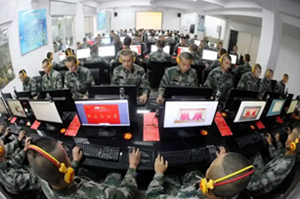 impact information abroad. The PLA is transforming its information warfare skills, and its forces have embraced the concept of virtual war. China’s cognitive warfare strategies are readily employed in grey zone tactics and techniques, simultaneously exercising influence through diplomatic, economic, and cultural spheres to create alternative realities to contest those of its Western adversaries.
 China controls domestic access to information through the “Great Firewall” and its domestic agenda is a sweeping effort that aims to combat internal dissention, deflect international interference with China’s surveillance state construct, and blunt the West’s global democracy narrative.1 Chinese AI-guided Large Language Model (LLM) censorship programs identify and report social media targets, modify public opinion, and track potential political opponents — then refine counters to quell voices that contest Chinese efforts to control access to information.2
Efforts to combat unfavorable information derive strength from citizens willing to strike perceived traitors with counterinformation, bots, and threats against any that threaten government dominance.3 In February 2025, it was reported that a Chinese group used ChatGPT to collect social media posts with sensitive material for the Chinese government. The same report claimed a collaborative relationship was ongoing between public and private actors in China. 4
These same tools are turned outward on commentators that post content that challenges China. Social media of all types is subject to this kind of censorship.
 Cognitive warfare can be directed against western democracies and is actively undercutting liberal beliefs by targeting the ability of consumers to discern the difference between real and fake information.5 Critical thinking is challenged by deep fakes and the ability of influencers to amplify content and linked rumors. Controlling domestic access to information, creating counternarratives for casting doubt on opposition voices, and surveilling the messages of domestic and international Chinese citizens helps the Chinese state create the conditions necessary for justifying actions designed to protect the state against enemies or provocateurs seeking to damage China’s development and political goals. Eroding confidence in foreign states, leaders, and militaries involve additional steps that the Chinese military recognizes as essential for future warfare.

China exercises control over foreign corporations and can facilitate information manipulation and access to metadata that can be mined and adapted to craft disinformation. The RAND Corporation details the PLA’s approach to a “Three Warfares” concept that targets “public opinion, psychological, and legal domains to deter and demoralize potential adversaries… to directly disrupt the societal cohesion of their geopolitical adversaries…”6 By striking at the will of the populace and their resilience to tailored messaging, future wars will be decided by the military forces best able to control the cognitive ability of their opponent. Leaders from the PLA Strategic Support Forces (SSF) [subsequently divided into the PLA Cyberspace, Aerospace, and Information Support Forces in April 2024] have posited that controlling the brain will give mastery over an opponent’s emotions, motives, judgements, and actions.7 Mastery then is predicated on access to information and the tools to gain access.

The Chinese military’s program of “intelligentized” and “informationized” operations is aided by AI and hackers that obtain personal data and information that can be aggregated to create custom content that appeals to cultural profiles in a way that past forms of propaganda cannot. The PLA’s readiness to utilize LLMs and AI to generate misinformation, fake news, false personas, and craft custom cyberattacks has already put disinformation in motion to attack the legitimacy of the PLA’s opponents, namely Taiwan.8 China’s war strategies are not confined to simple information campaigns but are integrated into the PLA’s intention to wage “Meta-War” in which a strategy of “Mirror War” will be used to subdue an opponent’s will, ostensibly through the use of deception and extensive data mining to create a mirror reality that exposes the weaknesses of an opponent  in the virtual world. China’s goal is to create conditions where the Chinese are the dominant power in a cyber world.9 Targeting opponents is easier when they provide the data for influence campaigns and surrender it willingly to those that are prepared to harvest it via algorithms or bots. The PLA has taken its operations into the academic and commercial spheres where partners help create outcomes under the government’s Military-Civil Fusion program.10 The resulting attempts to collect OSINT and Social Media Intelligence (SOCMINT) provide China with exploitable gaps that the targets or those in association with them provide to social media platforms.
A lack of cultural literacy from direct contact with a society is less of a challenge when AI can determine trends and the predominate political stances of wide target demographics. The same people or organizations that may have guarded business or professional associations may reveal exploitable information on social media. China has in the past taken the long view on influence operations, but that appears to be changing as China’s political warfare seeks to employ social media influencers as tools  of rapid cultural diffusion through follower networks. China also employs a “United Front” approach that includes dominating Chinese language media and appeals to ethnic Chinese military members and their families through social media.11 Influencers are the face of China and deliver narratives and talking points that enter mainstream discourse without disclosing the influencers’ links to official Chinese media or government sources. Often they spearhead campaigns that smother opposing views under a volume of posts and reposts on social media until the narrative is pro-China.12 In some cases, China has engaged in sustained attacks against dissenting voices in the United States by employing troll farms and coordinated attacks on individual integrity, reliability, or mental state. China has also attacked economic initiatives and American civil rights in attempts to strip away confidence in America’s international image and domestic legitimacy.13 State-level content generators and their proxies utilize the right of free speech to prepare the political, social, and cultural battlefields for the future.
 China’s cognitive warfare against the United States is happening now. Brains are being shaped to be receptive to the messages of social media influencers, conspiracy bloggers, and the incessant barrage of bot-generated content that clogs the internet. Critical thinking is a defense against many forms of cognitive warfare, but algorithms choose what percolates to the top of search engines and AI is improving content and message for selective appeals. Hacking brains will gain importance for future warfare as the ability to influence large groups through media and content manipulation creates mistrust. Fake news, questionable elections, and artificially generated “proof” in the form of doctored content or deepfakes will cause nations to stumble. In the age of information and AI, hacking people will provide access to their secrets and cognitive processes. War has evolved.
 If you enjoyed this post, check out the T2COM G-2‘s Operational Environment Enterprise web page, brimming with authoritative information on the Operational Environment and how our adversaries fight, including:
Our T2COM OE Threat Assessment 1.0, The Operational Environment 2024-2034: Large-Scale Combat Operations
Our China Landing Zone, full of information regarding our pacing challenge, including ATP 7-100.3, Chinese Tactics, T2COM OE Threat Assessment 1-1, How China Fights in Large-Scale Combat Operations, 10 Things You Didn’t Know About the PLA, and BiteSize China weekly topics.
Our Russia Landing Zone, including T2COM OE Threat Assessment 1-2, How Russia Fights in Large-Scale Combat Operations and the BiteSize Russia weekly topics. If you have a CAC, you’ll be especially interested in reviewing our weekly RUS-UKR Conflict Running Estimates and associated Narratives, capturing what we learned about the contemporary Russian way of war in Ukraine in 2022 and 2023 and the ramifications for U.S. Army modernization across DOTMLPF-P.
Our Iran Landing Zone, including the Iran Quick Reference Guide and the Iran Passive Defense Manual (both require a CAC to access).
Our North Korea Landing Zone, including Resources for Studying North Korea, Instruments of Chinese Military Influence in North Korea, and Instruments of Russian Military Influence in North Korea.
Our Irregular Threats Landing Zone, including TC 7-100.3, Irregular Opposing Forces, and ATP 3-37.2, Antiterrorism (requires a CAC to access).
Our Running Estimates SharePoint site (also requires a CAC to access) — documenting what we’re learning about the evolving OE (including Russia’s war in Ukraine war since 2024 and other ongoing competitions and conflicts around the globe). Contains our monthly OE Running Estimates, associated Narratives, and the quarterly OE Assessment Intelligence Posts.
Then review the following related Mad Scientist Laboratory content:
AI as a Propaganda Accelerant, by Aldrin Yashko
Influence at Machine Speed: The Coming of AI-Powered Propaganda by MAJ Chris Telley
The Exploitation of our Biases through Improved Technology, by Raechel Melling
Damnatio Memoriae through AI and What is the Threshold? Assessing Kinetic Responses to Cyber-Attacks, by proclaimed Mad Scientist Marie Murphy
Three Dates, Three Windows, and All of DOTMLPF-P and China and Russia: Achieving Decision Dominance and Information Advantage, by Ian Sullivan
Information Advantage Contribution to Operational Success, by CW4 Charles Davis
People’s Liberation Army Transitioning from “Informationized” to Intelligent Warfare Concepts
“Intelligentization” and a Chinese Vision of Future War
Gaming Information Dominance and Russia-Ukraine Conflict: Sign Post to the Future (Part 1) by Kate Kilgore
Sub-threshold Maneuver and the Flanking of U.S. National Security and Is Ours a Nation at War? U.S. National Security in an Evolved — and Evolving — Operational Environment, by Dr. Russell Glenn
The Erosion of National Will – Implications for the Future Strategist, by Dr. Nick Marsella
A House Divided: Microtargeting and the next Great American Threat, by 1LT Carlin Keally
Weaponized Information: What We’ve Learned So Far…, Insights from the Mad Scientist Weaponized Information Series of Virtual Events, and all of this series’ associated videos
Weaponized Information: One Possible Vignette and Three Best Information Warfare Vignettes
LikeWar — The Weaponization of Social Media
The Death of Authenticity: New Era Information Warfare
Active Defense: Shaping the Threat Environment and The Information Disruption Industry and the Operational Environment of the Future, by proclaimed Mad Scientist Vincent H. O’Neil , as well as his associated video presentation from 20 May 2020, part of the Mad Scientist Weaponized Information Series of Virtual Events.
In the Cognitive War – The Weapon is You! by Dr. Zac Rogers,
Non-Kinetic War, Global Entanglement and Multi-Reality Warfare and associated podcast, with COL Stefan Banach (USA-Ret.)
The Future of War is Cyber! by CPT Casey Igo and CPT Christian Turley
 >>>Reminder: Army Mad Scientist is CALLING ALL CREATORS with our Multi-Media Contest for imaginative thinkers who seek to showcase their ideas about Army Transformation in novel, alternative ways. Check out the contest’s guidelines here, consult your inner muse, unleash your creative talent, get cracking developing your entry, and submit it to ArmyMadSci@gmail.com — Deadline for submission is 14 February 2026 (only two weeks away)!
Disclaimer: The views expressed in this blog post do not necessarily reflect those of the U.S. Department of War, Department of the Army, or the U.S. Army Transformation and Training Command (T2COM).
About the Author: Dr. John Ringquist is a retired military officer of thirty-five years Army service. He writes about technology, security, and military topics, and is working on a book about new technologies and the future of war.
1 Hunter, Lance Y., Craig D. Albert, Josh Rutland, Kristen Topping & Christopher Hennigan, “Artificial intelligence and information warfare in major power states: how the US, China, and Russia are using artificial intelligence in their information warfare and influence operations.” Defense & Security Analysis, 8, Last Modified March 5, 2024. https://www.researchgate.net/publication/378764079_Artificial_intelligence_and_information_warfare_in_major_power_states_how_the_US_China_and_Russia_are_using_artificial_intelligence_in_their_information_warfare_and_influence_operations
2 Rollet, Charles. “Leaked Data exposes a Chinese AI censorship machine.” Last Modified March 26, 2025. https://techcrunch.com/2025/03/26/leaked-data-exposes-a-chinese-ai-censorship-machine/
3 Drinhausen, Katja and Helena Legarda. “Comprehensive National Security” unleashed: How Xi’s approach shapes China’s policies at home and abroad.” Mercator Institute for China Studies, Last Modified September 15, 2022, https://merics.org/en/report/comprehensive-national-security-unleashed-how-xis-approach-shapes-chinas-policies-home-and
4> Kaufman, Arthur. “Database Points to China’s Growing Use of A.I. for Online Surveillance and Censorship.” China Digital Times, Last Modified March 28, 2025. https://chinadigitaltimes.net/2025/03/database-points-to-chinas-growing-use-of-a-i-for-online-surveillance-and-censorship/
5 Hunter, 8.
6 Beauchamp-Mustafaga, Nathan, Kieran Green, William Marcellino, Sale Lilly, Jackson Smith. “Dr. Li Bicheng, or How China Learned to Stop Worrying and Love Social Media Manipulation.” RAND, 22-23, Last Modified October 1, 2024. https://www.rand.org/pubs/research_reports/RRA2679-1.html
7 Takagi, Koichiro. “The Future of China’s Cognitive Warfare: Lessons from the War in Ukraine.” War on the Rocks, Last Modified July 22, 2022. https://warontherocks.com/2022/07/the-future-of-chinas-cognitive-warfare-lessons-from-the-war-in-ukraine/
8 Office of the Director of National Intelligence, Annual Threat Assessment of the U.S. Intelligence Community, March 2025, 13. https://www.odni.gov/index.php/newsroom/reports-publications/reports-publications-2025/4058-2025-annual-threat-assessment
9 Baughman, Josh. “The Path to China’s Intelligentized Warfare: Converging on the Metaverse Battlefield.” The Cyber Defense Review, 34, Fall 2024. https://cyberdefensereview.army.mil/Portals/6/Documents/2024-Fall/Baughman_CDRV9N3-Fall-2024.pdf
10 Ranjan, Om. “The PLA And Intelligentized Warfare – Analysis.” Manohar Parrikar Institute for Defense Studies and Analyses, Last Modified December 2, 2022, https://www.eurasiareview.com/02122022-the-pla-and-intelligentized-warfare-analysis/
11 Gershaneck, Kerry K. “China’s “Second Battlefield” Political Warfare in Combat Operations.” Journal of Advanced Military Studies, Vol 15, No 2, 157. https://www.usmcu.edu/Outreach/Marine-Corps-University-Press/MCU-Journal/JAMS-vol-15-no-2/Chinas-Second-Battlefield/
12 Seitz, Amanda, Eric Tucker, and Mike Catalini. “How China’s TikTok, Facebook influencers push propaganda.” AP News, Last Modified March 30, 2022, https://apnews.com/article/china-tiktok-facebook-influencers-propaganda-81388bca676c560e02a1b493ea9d6760
13 O’Sullivan, Donnie, Curt Devine, and Allison Gordon. “China is using the world’s largest known online disinformation operation to harass Americans, a CNN review finds.” CNN, Last Modified November 13, 2023. https://www.cnn.com/2023/11/13/us/china-online-disinformation-invs/index.html